
Cellulite vs. Body Fat: What’s the Difference, and Can Massage Help?
When comparing cellulite vs. fat, it's unexpected how many women think they're the same thing. Losing weight and eliminating dimpled skin are two completely separate goals.
Most people want a firm, uniform appearance because healthy skin is never just a fad. It remains a timeless sign of youth and physical vitality, so getting real, permanent results comes down to picking the right strategies.
Once you realize these are two unique body processes, you can stop wasting energy on identical routines and start giving your skin and body what they truly need.
Let's Explore
- What is body fat? We all have it naturally, and our bodies need it to function properly. It helps regulate hormones, protects our internal organs, supports vitamin absorption, and provides stored energy when needed. Its amount varies from person to person based on age, sex, genetics, nutrition, and physical activity.
- What causes body fat to build up? Poor eating habits, a sedentary lifestyle, excessive calorie intake, and various genetic factors can all contribute to fat accumulation. Too much fat can affect not only your appearance but also your health.
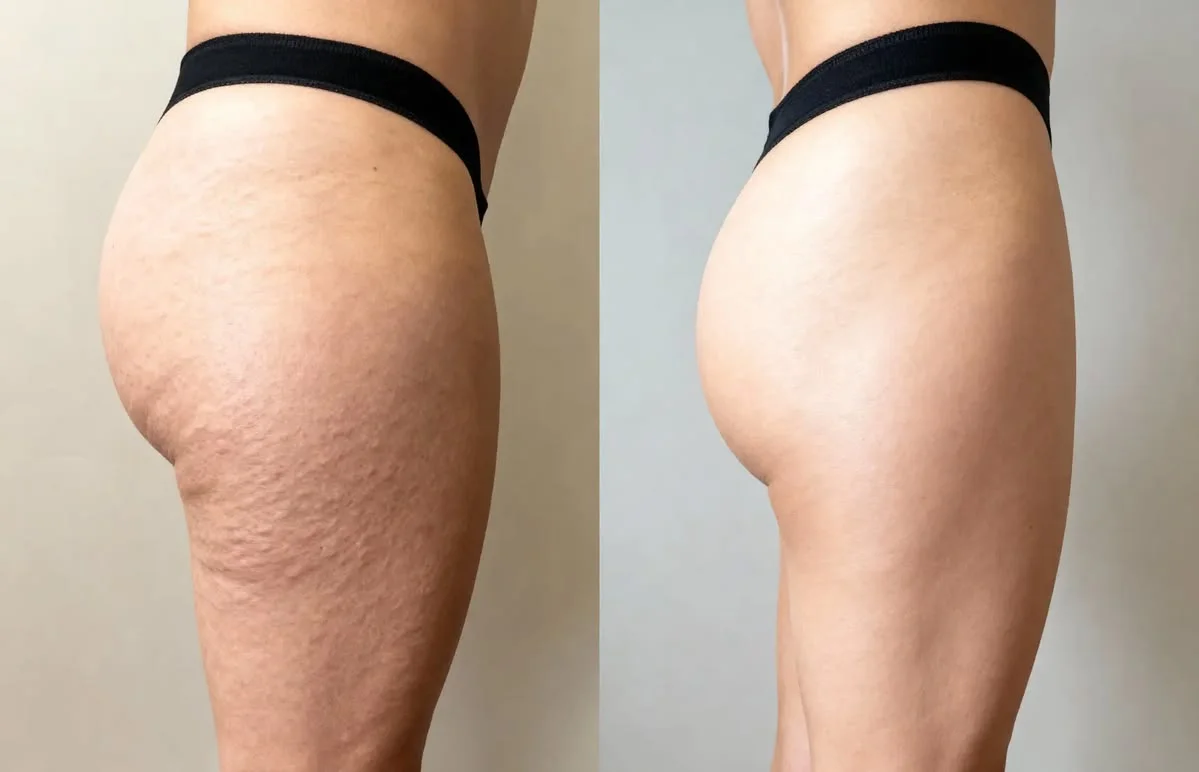
- What is cellulite? It's not the tissue itself, but rather the visible effect of how fat is distributed beneath the skin. It can occur even in slim, physically active people, isn't a disease, and isn't necessarily linked to excess weight.
- What causes cellulite? It forms when fat cells press upward against rigid connective bands beneath the skin. Genetics, hormones, age, skin density, and how fat settles across your body all affect how noticeable it is.
Invasive and Surgical procedures
For those looking for faster and more significant changes, invasive and surgical procedures may be an option. They target the fibrous connective tissue septa responsible for pulling the skin downward and aim to stimulate dermal tightening. Common examples range from subcision and deep RF microneedling to lipolytic and enzyme injections, acoustic wave therapy, and liposuction. However, they carry risks and cannot be used for every person.
In most cases, starting with and sticking to simple, non-aggressive methods is the smartest and safest decision. A healthy diet, strength workouts, regular walking, and a good massage course can make a noticeable difference in cosmetic concerns, without the pain, bruising, recovery time, or potential complications associated with more aggressive procedures. Plus, these habits make your whole body healthier and stronger at once, not just a few bumpy spots.
Does Losing Weight Get Rid of Cellulite?
The first tool for fighting fatty tissue is, of course, setting up a proper nutrition plan. So, does losing weight get rid of cellulite? Yes, it helps. It can make dimples and bumps less evident and create a firmer, more defined silhouette.
In your diet, it is worth paying attention to several food groups:
- Quality protein sources.
- Colorful vegetables and whole fruits.
- Foods packed with omega-3 fatty acids.
- High-fiber foods.
- Enough water.
However, dietary changes alone cannot eliminate dimpled skin. Its formation is also determined by tissue structure, skin thickness, and fat cell distribution.
Why Can Cellulite Still Be Visible If You Work Out?
Most modern people stay active by working out, going to the gym, or doing different fitness programs. Physical activity helps boost metabolism, improve lymphatic flow, and promote fat burning.
Which types of exercise deliver the strongest results?
- Strength training: squats, lunges, glute bridges, deadlifts, and exercises with weights.
- Cardio workouts: brisk walking, swimming, cycling, and moderate running.
- Functional training: bodyweight movements, resistance band exercises, and workouts with additional equipment.
Why do I have cellulite if I work out? That's a question many women ask. Meticulous hard work on yourself does not always bring the desired results. Due to the specifics of the female body and how nature designed it, female physiology is wired to store mass. And while exercise can improve muscle tone and composition, it can't completely eliminate uneven skin texture or change our genes, estrogen levels, or connective tissue structure.
Don't focus all your efforts on one problem area. Spot fat reduction isn't possible, so doing a hundred leg swings every day won't specifically remove deposits from your thighs. Real transformations come from working with the body as a whole, combining exercise and healthy habits with a broader strategy for body care. Massage and other complementary approaches can also help improve the appearance.
Can Massage Help?
Massage is one of the most widespread ways to address the visual signs of uneven skin texture. Does massage help cellulite? Yes, it can make a difference. It helps enhance the appearance, decrease fluid retention, and make the tissues feel firmer.
At the same time, manual therapy cannot physically break down or destroy fat cells - from a physiological standpoint, that is impossible. But regular treatments can help. The outcomes depend on the method used, how intensive the sessions are, and how consistently they're performed.
The main effects of massage:
- Lymphatic drainage
- Better circulation
- Work on connective tissue
Which Types of Massage Help with Cellulite?
Effective types of anti-cellulite massage fall into manual, device-based, and at-home options.
- Lymphatic drainage massage. A gentle, painless technique that follows the exact path of your lymphatic flow. Practitioners perform it either by hand or using hydro-massage methods.
- Classic Body Sculpting Massage. This approach involves deeper work on the subcutaneous fat layer using kneading and rubbing movements. Depending on the treatment, it can be done manually or with water-based techniques.
- Endospheres therapy. A weighted handpiece loaded with spinning silicone spheres rolls over the skin to compress tissue and deliver deep micro-vibrations.
- LPG Massage. The machine uses suction to pull a fold of skin into the applicator, where moving rollers massage and knead the tissue.
- Charcot shower. A type of hydro-massage where a targeted, high-pressure stream of water with alternating temperatures works over the body.
- Dry brushing. A pre-shower exfoliating ritual involving firm, upward strokes across dry skin with a natural-bristle brush.
To actually see a difference, people usually get 8-12 salon treatments done with a 2-3 day break in between, and keep up with home massages regularly alongside eating right and exercising.
Add-Ons to Massage Treatments
Does massage help cellulite if you add topical products or wraps? Yes. Scrubs, serums, and body wraps can help firm and smooth the skin's surface. Ingredients such as caffeine, retinol, niacinamide, algae extracts, clay, and essential oils may contribute to a smoother appearance. Warming and cooling formulas can also stimulate local microcirculation, temporarily reduce mild puffiness, and support collagen production.
Ideal Plan Against Cellulite
- Eating well-balanced meals every day.
- Proper hydration.
- Resistance training 2-3 times per week.
- Cardio sessions 2-3 times a week.
- Specialized anti-cellulite bodywork, ranging from manual and hydrotherapy to vacuum or roller massage.
- Active topical body-care products.
- Regular at-home upkeep between sessions.
Massage in Your Routine
So, cellulite vs fat: what have we learned? They are basically the same thing, except fat is the actual tissue, while cellulite is the visual effect of how it sits beneath the skin. Fortunately, numerous effective strategies exist for adjusting body weight and refining outward texture.
I would also like to note that fat deposits accumulate in the body differently. Certain areas, including the buttocks, abdomen, thighs, and lower arms, may be particularly resistant to changes despite regular exercise, dietary adjustments, and adequate hydration. They need direct, targeted attention.
Manual and hydromassage techniques are among the best approaches to include in your routine. Make time for these treatments at least a couple of times a month to help maintain the results you've achieved.